
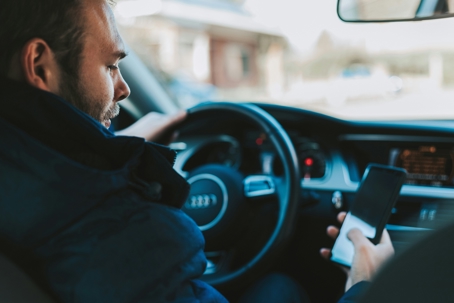
Distracted driving is one of the most dangerous behaviors on California roads. A driver checking a text message, adjusting a navigation system, eating, reaching for an object, or turning to speak with a passenger may look away from the road for only a few seconds—but those few seconds can cause a devastating car accident.
For people injured because another driver was distracted, the consequences can include emergency medical treatment, chronic pain, lost income, property damage, emotional trauma, and significant financial uncertainty. In serious cases, victims may face permanent disabilities or families may lose a loved one.
At Arshakyan Law Firm, we represent people injured in motor vehicle accidents and help them understand their legal rights after a crash. If you were injured by a distracted driver in California, determining exactly what happened, proving negligence, documenting your damages, and protecting evidence can play an important role in the outcome of your personal injury claim.
What Is Distracted Driving?
Distracted driving occurs when something takes a driver's attention away from safely operating a vehicle. Although cell phone use is one of the most recognized forms of distracted driving, distraction can involve many different behaviors.
There are generally three major categories of driver distraction:
Visual distraction occurs when a driver takes their eyes off the road. Examples include reading a text, looking at GPS directions, searching for something inside the vehicle, or looking at an accident on the side of the road.
Manual distraction occurs when a driver takes one or both hands away from controlling the vehicle. Eating, applying makeup, reaching into the back seat, or holding a phone can create manual distractions.
Cognitive distraction occurs when a driver's mind is no longer fully focused on driving. An intense conversation, emotional distress, fatigue, or concentrating heavily on a phone conversation can affect a driver's awareness and reaction time.
Some activities involve all three types of distraction simultaneously. Texting while driving is a particularly dangerous example because the driver may be looking at the phone, holding it, and mentally concentrating on the message instead of traffic conditions.
Common Causes of Distracted Driving Accidents
A distracted driving accident can happen on a freeway, residential street, intersection, parking lot, or virtually anywhere vehicles are operating.
Common distractions include:
- Texting or reading text messages
- Using social media while driving
- Making or answering phone calls
- Watching or recording videos
- Taking photographs
- Entering information into a GPS or navigation app
- Changing music or podcasts
- Eating or drinking
- Applying makeup or grooming
- Reaching for objects inside the vehicle
- Talking to passengers
- Dealing with children or pets
- Looking at something outside the vehicle
- Using dashboard touchscreens
- Reading emails or work messages
The issue is not simply whether the driver was using a phone. The central question in a California distracted driving accident claim is often whether the driver failed to use reasonable care and whether that failure caused the collision and resulting injuries.
Why Distracted Driving Is So Dangerous
At freeway speeds, a vehicle travels a substantial distance in only a few seconds. A driver looking away may fail to notice that traffic has stopped, a traffic signal has changed, another vehicle has entered an intersection, or a pedestrian has entered a crosswalk.
Distracted drivers may also have delayed reactions. Even after recognizing a dangerous situation, they may not have enough time to brake or maneuver safely.
This can lead to:
Rear-end collisions. A distracted driver may not realize traffic ahead has slowed or stopped.
Intersection accidents. Drivers looking at phones or navigation systems may run red lights or stop signs.
Lane-change accidents. A distracted driver may drift into another lane or fail to check surrounding traffic.
Pedestrian and bicycle accidents. Vulnerable road users can be especially difficult for distracted drivers to notice in time.
Freeway collisions. Higher speeds can increase the severity of injuries when a distracted driver causes an accident.
California Distracted Driving Laws
California has laws restricting handheld cell phone use while driving. However, a distracted driving personal injury case is not limited to proving a cell phone violation.
A driver has a general responsibility to operate a vehicle with reasonable care. If a driver becomes distracted by eating, passengers, a GPS device, or another activity and causes an accident, that conduct may still support a negligence claim depending on the circumstances.
A traffic citation can be useful evidence, but an injured person does not necessarily need the other driver to receive a ticket before pursuing compensation.
The civil investigation may uncover evidence that was not available or examined at the accident scene.
How Do You Prove the Other Driver Was Distracted?
One of the most important parts of a distracted driving accident claim is evidence.
A driver may initially admit, “I was looking at my phone,” and later change the story. Other drivers may deny being distracted from the beginning.
For this reason, preserving evidence as early as possible can be extremely important. Potential evidence may include:
Cell phone records. Depending on the circumstances and applicable legal procedures, records may help establish phone activity around the time of the collision.
Text and messaging evidence. The timing of communications can potentially support an allegation that a driver was distracted.
Witness statements. Another motorist, passenger, pedestrian, or bystander may have seen the driver looking down or holding a phone.
Dashcam footage. Cameras inside or outside vehicles can provide valuable evidence regarding how an accident occurred.
Surveillance video. Nearby businesses, residences, parking facilities, and traffic areas may have cameras that captured the collision.
Police reports. Officers may document statements, observations, citations, witnesses, and other information.
Vehicle data. Modern vehicles may contain electronic information that helps reconstruct events before a collision.
Photographs and physical evidence. Vehicle damage, skid marks, debris, and final resting positions can help accident reconstruction experts evaluate how the crash happened.
Case Study Example #1: Texting and a Rear-End Collision
Consider a hypothetical example.
A driver is traveling through Los Angeles traffic while reading a text message. Traffic ahead stops suddenly. Because the driver's attention is on the phone, the driver does not brake in time and crashes into the vehicle ahead.
The injured driver develops neck and lower-back pain and later requires physical therapy and additional medical treatment.
The insurance company may initially characterize the collision as a “minor rear-end accident.” But property damage alone does not determine the seriousness of an injury.
A personal injury claim may examine medical records, diagnostic testing, treatment recommendations, lost wages, the victim's physical limitations, and evidence showing that the at-fault driver was distracted immediately before impact.
The value of the case should be based on the evidence and damages—not simply the insurance company's initial characterization of the collision.
Case Study Example #2: Distracted Driver Runs a Red Light
Imagine another scenario.
A driver is entering an address into a navigation app while approaching an intersection. The driver fails to notice a red traffic signal and enters the intersection, striking another vehicle.
The injured motorist suffers a fractured wrist and shoulder injury and cannot work for several weeks.
Evidence could potentially include intersection cameras, witness statements, vehicle damage patterns, police findings, medical documentation, and information regarding the driver's actions immediately before the collision.
The victim may seek compensation for medical expenses, lost income, pain and suffering, and other legally recoverable damages.
Case Study Example #3: Distracted Driving Involving a Pedestrian
Distracted driving can be particularly dangerous for pedestrians.
Suppose a driver is looking down at a phone while making a right turn and fails to see a pedestrian legally crossing the street.
The pedestrian suffers significant injuries requiring hospitalization and months of rehabilitation.
A case involving serious injuries may require a detailed analysis of future medical needs, reduced earning capacity, permanent limitations, pain, emotional consequences, and the effect of the injuries on the person's daily life.
This demonstrates why serious personal injury cases require more than calculating current medical bills.
What Compensation Can a Distracted Driving Accident Victim Recover?
Every California car accident case is different. Compensation depends on factors including liability, insurance coverage, medical evidence, injury severity, prognosis, lost income, and the long-term consequences of the accident.
Potential damages may include:
Medical Expenses
A claim may include reasonable and necessary medical expenses associated with the accident, such as emergency treatment, hospitalization, physician visits, diagnostic imaging, physical therapy, medications, injections, surgery, rehabilitation, and other appropriate treatment.
Future medical care may also be important when an injury requires ongoing treatment.
Lost Wages
If injuries prevent someone from working, the resulting lost income may potentially be included in the claim.
Loss of Future Earning Capacity
Serious or permanent injuries may affect a person's ability to perform the same occupation or earn the same income in the future.
Pain and Suffering
California personal injury claims may include compensation for physical pain and the broader non-economic effects of an injury, depending on the circumstances.
Property Damage
Victims may also have claims involving vehicle repair or replacement and other damaged property.
What If the Insurance Company Says You Were Partially Responsible?
California follows a pure comparative negligence system.
This means an injured person may potentially recover damages even when they are partially responsible for an accident, although their recovery can be reduced according to their percentage of fault.
For example, assume total damages are determined to be $200,000, and the injured person is found 20% responsible. A simplified comparative-fault calculation would reduce the recovery by 20%, potentially leaving $160,000.
This is one reason insurance-company allegations about fault should be examined carefully rather than automatically accepted.
Common Injuries Caused by Distracted Driving Accidents
Distracted driving crashes can cause injuries ranging from temporary pain to catastrophic, permanent conditions.
Common injuries include:
- Whiplash and neck injuries
- Back injuries
- Herniated or bulging discs
- Shoulder injuries
- Knee injuries
- Broken bones
- Traumatic brain injuries
- Concussions
- Facial injuries
- Spinal cord injuries
- Nerve damage
- Internal injuries
- Soft-tissue injuries
- Psychological and emotional trauma
Symptoms do not always appear immediately after an accident. Adrenaline and shock may temporarily mask pain.
Seeking appropriate medical evaluation also creates documentation connecting reported injuries and symptoms to the accident.
What Should You Do After a Distracted Driving Accident?
Your health and safety should come first. Call emergency services when appropriate and seek medical attention for injuries.
When possible, document the accident scene. Take photographs or video of the vehicles, damage, roadway, traffic signals, skid marks, license plates, and surrounding area.
Obtain contact information from witnesses. If someone tells you they saw the other driver using a phone, that information could become important later.
Be cautious when communicating with insurance companies. Insurance adjusters investigate claims on behalf of insurance companies, and statements made shortly after an accident can affect how a claim is evaluated.
Preserve documents involving medical treatment, missed work, transportation expenses, vehicle repairs, and other accident-related losses.
Why Acting Quickly Can Matter
Evidence can disappear.
Businesses may overwrite surveillance recordings. Witnesses may become difficult to locate. Vehicles may be repaired or destroyed. Memories fade.
California personal injury cases are also subject to deadlines. The applicable deadline can depend on the facts, including whether a government entity or other special circumstance is involved.
Waiting too long can potentially affect legal rights.
Speaking with a California personal injury attorney early can help determine what deadlines apply and what evidence should be preserved.
How Arshakyan Law Firm Can Help After a Distracted Driving Accident
A distracted driving accident claim can involve much more than submitting medical bills to an insurance company.
At Arshakyan Law Firm, our approach is built around investigation, evidence, medical documentation, and strategy.
Depending on the case, this may involve investigating how the collision happened, identifying responsible parties, preserving available evidence, reviewing insurance coverage, documenting injuries and financial losses, communicating with insurance companies, negotiating a settlement, and preparing a case for litigation when necessary.
The objective is to understand the complete impact of the accident—not simply the immediate expenses.
Speak With a California Distracted Driving Accident Lawyer
A distracted driver can change someone's life in seconds.
If you were injured because another driver was texting, using a phone, operating a navigation system, eating, or otherwise failing to pay attention, you may have the right to pursue compensation under California personal injury law.
The sooner the circumstances are investigated, the better the opportunity may be to preserve important evidence and build a strong claim.