
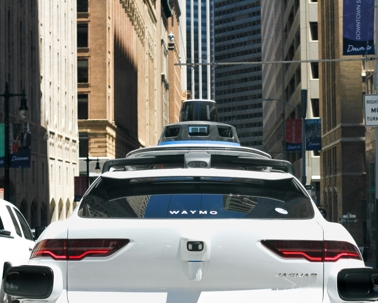
Self-driving vehicles are no longer a futuristic concept. In California, autonomous vehicles operated by companies such as Waymo are already sharing public roads with drivers, pedestrians, bicyclists, motorcyclists, and passengers. As this technology expands, an important legal question is becoming increasingly relevant:
Who is responsible when a Waymo vehicle causes or is involved in an accident?
The answer can be considerably more complicated than in a traditional car accident.
In an ordinary California traffic collision, investigators typically focus on the actions of the drivers involved. In a Waymo accident, however, determining liability may require examining the autonomous driving system, vehicle data, software behavior, road conditions, other motorists, maintenance, and potentially defective vehicle components.
A Waymo vehicle's involvement also does not automatically mean Waymo was responsible. Another motorist, cyclist, pedestrian, contractor, vehicle manufacturer, component manufacturer, or multiple parties could potentially share responsibility depending on the evidence.
For someone injured in an autonomous vehicle accident, identifying every potentially liable party can be critical to pursuing compensation.
How Does a Waymo Self-Driving Vehicle Work?
Waymo's autonomous driving technology is known as the Waymo Driver. The system uses technology designed to perceive the surrounding environment and make driving decisions without requiring a human driver to continuously control the vehicle.
That distinction matters legally.
With a conventional accident, questions often include:
Was the driver speeding? Were they distracted? Did they run a red light? Did they fail to yield? An accident involving a fully autonomous vehicle can introduce entirely different questions:
Did the autonomous driving system correctly identify another vehicle? Did it recognize a pedestrian or cyclist? Did the vehicle respond appropriately to construction? Did mapping information accurately represent the roadway? Did a sensor or component malfunction? Did the system properly interpret unusual traffic conditions?
These questions can transform a seemingly straightforward collision into a technically complex personal injury investigation.
Waymo reports that its autonomous vehicles have accumulated more than 220 million fully autonomous miles through March 2026 across several operating areas. The company reports substantially lower rates of serious-injury crashes compared with human drivers over comparable mileage. Those statistics are important context, but they do not determine liability in an individual collision.
Even technology with a strong overall safety record can be involved in accidents.
Who Can Be Responsible for a Waymo Accident?
There is no universal answer. Liability depends on how the accident happened and what the evidence establishes.
Potentially responsible parties may include Waymo, another driver, a manufacturer or supplier, a maintenance provider, a governmental entity in certain roadway-defect cases, or another person or business whose negligence contributed to the collision.
California's normal principles of negligence and product liability can therefore intersect with rapidly developing autonomous vehicle technology.
Could Waymo Be Liable?
Potential liability involving Waymo may become an important issue when evidence suggests that the operation of the autonomous vehicle contributed to the collision.
An attorney investigating such a claim may examine whether the vehicle appropriately detected hazards, followed traffic controls, responded to surrounding vehicles, navigated construction zones, reacted to pedestrians and cyclists, and handled unusual roadway or weather conditions.
Recent federal recalls demonstrate why the technology itself can be relevant.
In May 2026, NHTSA documented a Waymo recall involving 3,791 fifth- and sixth-generation Automated Driving Systems. According to the federal recall documents, the affected system could, under certain circumstances, slow but continue into standing water on higher-speed roads, potentially increasing the risk of loss of control, crashes, or injuries.
Another NHTSA recall reported in June 2026 involved 3,871 fifth-generation Waymo automated driving systems and concerned circumstances in which an autonomous vehicle
could enter and travel at speed through freeway construction zones. Waymo subsequently deployed remedy software to affected vehicles.
A recall does not prove that Waymo is responsible for a particular accident. However, when an accident resembles behavior associated with a known safety issue, recall history and software information can become relevant evidence for attorneys and experts to investigate.
Another Driver May Be Responsible
One of the biggest misconceptions about autonomous vehicle accidents is that the self-driving company must be responsible simply because its vehicle was involved.
That is not necessarily true.
Imagine that a Waymo vehicle is traveling legally through an intersection when another driver runs a red light and strikes it.
The human driver may be primarily or entirely responsible. Similarly, another motorist could potentially cause an accident by:
- speeding or driving too fast for conditions;
- texting or otherwise driving distracted;
- driving under the influence;
- making an unsafe lane change;
- following too closely;
- failing to yield;
- running a red light or stop sign;
- making an illegal turn.
The California DMV identifies unsafe speed, distraction, improper turns, failure to follow right-of-way rules, and failure to obey traffic signals among common causes of collisions.
The fact that one vehicle happened to be autonomous does not erase another driver's duty to operate safely.
What Happens When Both Parties Contributed?
California follows a pure comparative negligence approach.
This is particularly important in complicated autonomous vehicle crashes because responsibility may not necessarily belong to only one party.
Consider a hypothetical example.
A driver makes an unsafe lane change in front of a Waymo vehicle. The autonomous vehicle detects the car but allegedly responds too slowly. Investigators determine that the human driver was 70% responsible while another responsible party was 30% responsible.
The injured person's ability to recover damages can depend on their own percentage of fault and the legal responsibility attributable to the defendants.
This is why a serious autonomous vehicle accident should not be analyzed only as:
"Was Waymo at fault?"
The more useful question is:
"What did every party do, and how did each action or failure contribute to the collision and resulting injuries?"
Could a Vehicle or Component Manufacturer Be Responsible?
Potential product liability claims may also arise.
Autonomous vehicles depend on sophisticated combinations of hardware and software. A serious investigation could examine cameras, sensors, computing hardware, braking systems, steering components, tires, electrical systems, and other vehicle components.
Suppose, hypothetically, that the autonomous driving system correctly commands emergency braking but a defective braking component prevents the vehicle from stopping as intended.
The legal investigation might extend beyond the autonomous driving software to the manufacturer or supplier responsible for the defective component.
Depending on the facts, California product liability theories can involve manufacturing defects, design defects, or inadequate warnings.
These cases often require engineers, accident reconstruction specialists, automotive experts, and other technical professionals.
Pedestrian and Bicycle Accidents Involving Waymo
Pedestrians and bicyclists deserve particular attention because they have virtually no physical protection when struck by a motor vehicle.
An autonomous vehicle must operate in environments containing crosswalks, cyclists, scooters, children, construction workers, delivery drivers, emergency responders, and pedestrians whose movements may be unpredictable.
Investigators may need to determine whether the system detected the individual, how early detection occurred, how the individual was classified, what path the vehicle predicted, and what braking or evasive response followed.
Waymo reports that, compared with human drivers over comparable distances in its operating cities, its system has experienced substantially fewer injury-causing crashes involving pedestrians and cyclists. Again, these aggregate safety statistics do not establish responsibility in any particular accident.
Case Study #1: A Waymo Rear-End Collision
Consider a hypothetical Los Angeles accident.
A driver stops at a traffic signal. A Waymo vehicle traveling behind that car fails to stop in time and rear-ends it.
At first glance, liability might appear straightforward.
But an autonomous vehicle accident attorney could investigate much more:
What did the sensors detect? When was the stopped vehicle recognized? What speed was the Waymo traveling? When did braking begin? Was there a hardware malfunction? Were environmental conditions affecting perception? Was the other vehicle already stopped or did it suddenly cut into the lane?
The answers could dramatically change the liability analysis.
Case Study #2: A Human Driver Hits a Waymo Passenger
Now imagine a Waymo carrying a passenger legally enters an intersection on a green light. A human-driven vehicle runs the red light and crashes into the Waymo.
The passenger suffers a concussion, neck injuries, and a fractured wrist.
Although the injured person was riding in an autonomous vehicle, the evidence may show that the other motorist caused the accident.
An attorney would investigate available insurance coverage and all potentially responsible parties rather than automatically assuming that the autonomous vehicle operator must pay the claim.
Case Study #3: Construction Zone Accident
Consider another hypothetical case.
A Waymo vehicle approaches an active freeway construction zone. Traffic lanes have temporarily shifted, cones redirect vehicles, and ordinary lane markings conflict with the temporary traffic pattern.
The autonomous vehicle enters an unsafe portion of the construction zone and a collision occurs.
An investigation could involve autonomous-driving data, mapping information, construction-zone configuration, warnings and signage, the behavior of surrounding drivers, and relevant software history.
This hypothetical is especially significant because NHTSA's June 2026 Waymo recall specifically addressed certain circumstances involving autonomous vehicles entering freeway construction zones.
The recall itself would not establish liability. The particular accident would still require independent investigation.
Evidence Can Be Crucial After a Waymo Accident
Autonomous vehicle accident cases may contain evidence that does not exist—or is much less extensive—in traditional crashes.
The vehicle may generate information concerning its movements and operation before and during a collision.
Potential evidence can include vehicle data, sensor information, software information, video footage, photographs, police reports, witness statements, traffic-camera footage, nearby surveillance cameras, vehicle damage, medical records and accident-scene evidence.
This makes early preservation of evidence extremely important.
An attorney may need to determine what information exists, who possesses it, how long it is retained, and what legal procedures are available to preserve or obtain it.
California also allows members of the public to report autonomous vehicle incidents or safety concerns to the California DMV, while NHTSA maintains a separate process for reporting autonomous vehicle safety complaints.
What Injuries Can Occur in a Waymo Accident?
The technology operating a vehicle may be different, but the human body remains vulnerable to the same forces experienced in other automobile collisions.
Common car accident injuries may include whiplash, cervical and lumbar injuries, herniated or bulging discs, traumatic brain injuries, concussions, fractures, shoulder injuries, knee injuries, nerve damage, soft-tissue injuries, internal injuries, and psychological trauma.
Serious collisions can cause permanent disabilities or fatal injuries. Importantly, symptoms are not always immediate.
Someone may initially feel relatively normal because of adrenaline and begin experiencing pain, headaches, stiffness, dizziness, or neurological symptoms hours later.
Obtaining appropriate medical evaluation after an accident protects both the person's health and the documentation of injuries potentially connected to the collision.
What Compensation May Be Available After a Waymo Accident?
When another party is legally responsible for an accident, an injured person may be entitled to pursue compensation depending on the circumstances.
Recoverable damages can potentially include past and future medical expenses, lost income, diminished earning capacity, rehabilitation, property damage, pain and suffering, and other accident-related losses.
Catastrophic injuries can require extensive future care.
For example, a traumatic brain injury may affect someone's ability to work for years. A spinal injury may require surgery and rehabilitation. Permanent impairment can affect future earning capacity and quality of life.
That is why evaluating a personal injury claim solely according to the first emergency-room bill can substantially underestimate its actual value.
What Should You Do After an Accident Involving a Waymo?
Safety and medical care should come first.
When possible, document the scene thoroughly. Photograph the Waymo vehicle, other vehicles, damage, intersection, traffic controls, road conditions, skid marks, construction areas, and visible injuries. Obtain witness information and preserve any videos.
Report the collision appropriately and avoid making speculative statements about fault before the evidence has been evaluated.
In California, certain collisions involving injury, death, or qualifying property damage must also be reported to the DMV. The DMV explains that an SR-1 report generally must be submitted within 10 days when anyone is injured or killed or when the collision causes more than $1,000 in property damage.
Why Waymo Accident Claims Can Be Different From Traditional Car Accident Claims
Autonomous vehicle cases sit at the intersection of California personal injury law, automobile negligence, product liability, insurance law, and emerging technology.
A traditional car accident may center on one person's driving behavior.
A Waymo accident can potentially require reconstruction of decisions made by an automated driving system.
That difference matters.
Determining responsibility may require attorneys to work with technical experts capable of understanding how an autonomous vehicle perceived its surroundings and why it responded as it did.
At the same time, autonomous vehicles should not automatically be portrayed as unsafe. Waymo's published data reports significantly fewer serious-injury crashes than comparable human driving, and research using insurance claims has also reported lower claim frequencies in studied Waymo operations.
The legal question after an individual accident remains the same:
What actually happened in this crash, who contributed to it, and what evidence proves it?
Injured in a Waymo Accident in California?
If you were injured as a passenger, driver, pedestrian, cyclist, or motorcyclist in a collision involving a Waymo or another autonomous vehicle, determining responsibility may require considerably more investigation than an ordinary car accident claim.
Arshakyan Law Firm can investigate the circumstances of the collision, identify potentially responsible parties, evaluate available insurance coverage, preserve important evidence, and pursue the compensation available under California law.
Do not assume that an insurance company's first explanation of fault, or its first settlement offer, tells the entire story.
Call Arshakyan Law Firm today at 818-650-9985. We are in your corner!
This article provides general information and does not constitute legal advice. Liability and available compensation depend on the specific facts and applicable law in each case.