
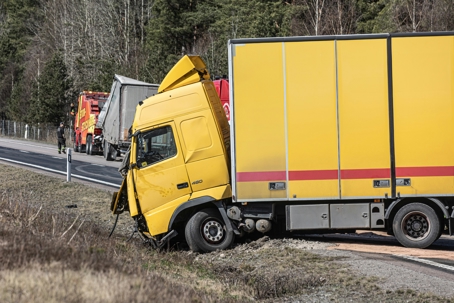
Commercial truck accidents are among the most devastating motor vehicle collisions on California's roads. Because a fully loaded tractor-trailer can weigh up to 80,000 pounds, even a low-speed impact can cause catastrophic injuries, permanent disabilities, or fatalities. Unlike a typical car accident, truck accident cases involve a complex network of federal laws, state regulations, corporate policies, insurance companies, and multiple potentially liable parties.
One of the most overlooked, but most important, aspects of a truck accident case is whether the trucking company or driver violated Federal Motor Carrier Safety Administration (FMCSA) regulations. These rules exist to protect everyone on the road by establishing strict standards for commercial drivers, trucking companies, vehicle maintenance, cargo securement, driver qualifications, and hours of service.
When these regulations are violated, they can become powerful evidence in a personal injury claim. In many cases, proving that a trucking company failed to follow federal safety rules can significantly increase the value of a settlement or verdict.
At Arshakyan Law Firm, we understand that truck accident cases require a far more detailed investigation than ordinary automobile collisions. Our legal team thoroughly examines whether federal trucking regulations were violated and uses that evidence to aggressively pursue the maximum compensation our clients deserve.
What Are Federal Trucking Regulations?
Federal trucking regulations are safety rules established and enforced by the Federal Motor Carrier Safety Administration (FMCSA). These regulations apply to commercial motor carriers operating across state lines and, in many situations, influence trucking operations within California as well.
Their primary purpose is simple:
Reduce accidents, improve highway safety, and protect motorists from preventable commercial truck crashes.
These regulations govern nearly every aspect of the trucking industry, including:
- Driver qualifications
- Hours of service
- Drug and alcohol testing
- Vehicle inspections
- Truck maintenance
- Cargo securement
- Driver training
- Record keeping
- Electronic Logging Devices (ELDs)
- Safety monitoring
Failure to comply with these regulations may constitute evidence of negligence in a personal injury lawsuit.
Why Federal Regulations Matter in Your Truck Accident Case
Unlike passenger vehicle collisions, truck accident cases often involve corporations with millions, or even billions, of dollars in assets.
These companies employ:
- Safety directors
- Fleet managers
- Maintenance departments
- Insurance adjusters
- Accident investigators
- Defense attorneys
Immediately after a serious crash, many trucking companies begin building their defense. Accident victims deserve a legal team doing exactly the same thing.
One of the first questions experienced truck accident attorneys ask is:
Did the trucking company violate any federal safety regulations?
If the answer is yes, those violations may demonstrate that the crash was entirely preventable.
Common Federal Trucking Regulations That Affect Injury Claims
Hours-of-Service (HOS) Regulations
Driver fatigue remains one of the leading causes of commercial truck accidents.
Research has consistently shown that fatigued driving can impair judgment almost as severely as alcohol impairment.
To reduce fatigue-related crashes, the FMCSA limits the number of hours commercial drivers may operate before taking mandatory breaks.
Generally, property-carrying commercial drivers must comply with rules regarding:
- Maximum driving hours
- Mandatory rest breaks
- Weekly driving limits
- Off-duty requirements
These rules are electronically tracked through Electronic Logging Devices (ELDs).
If investigators discover that a driver exceeded legal driving limits before a collision, the violation can become powerful evidence of negligence.
Case Study: Driver Fatigue Leads to a Serious Collision
A tractor-trailer collided with several stopped vehicles during evening rush-hour traffic. The truck driver insisted he simply "didn't see traffic slowing."
However, investigators downloaded the truck's Electronic Logging Device and discovered the driver had been on duty for more than fourteen consecutive hours.
Further investigation revealed:
- Required rest breaks had been skipped.
- Driving logs had been falsified.
- The trucking company encouraged unrealistic delivery schedules.
The driver's fatigue became a major contributing factor in the crash, resulting in significantly higher compensation for the injured victims.
Electronic Logging Devices (ELDs)
Electronic Logging Devices have dramatically changed the trucking industry. Rather than relying solely on handwritten logbooks, ELDs automatically record:
- Driving time
- Engine operation
- Vehicle movement
- Idle time
- Mileage
- GPS location
- Duty status
- Rest periods
Because these records are electronic, they are often much more difficult to manipulate. ELDs frequently expose:
- Hours-of-service violations
- Driver fatigue
- Falsified records
- Unauthorized route changes
- Missed inspections
These records can directly contradict statements made by drivers after an accident.
Driver Qualification Requirements
Federal law requires trucking companies to hire qualified commercial drivers.
Every driver must satisfy numerous safety requirements before operating a commercial vehicle.
These include:
- Commercial Driver's License (CDL)
- Medical certification
- Drug and alcohol testing
- Safe driving history
- Required training
- Background review
- Ongoing performance monitoring
When trucking companies ignore these requirements, they may be held responsible for negligent hiring or negligent retention.
Example: Negligent Hiring
Imagine a trucking company hires a driver with:
- Multiple DUI convictions
- Numerous speeding citations
- Previous at-fault commercial crashes
- Failed drug tests
If that driver later causes a catastrophic collision, investigators may determine that the company should never have placed the driver behind the wheel.
Liability may extend beyond the driver to the trucking company itself.
Drug and Alcohol Testing Requirements
Federal regulations require commercial drivers to undergo:
- Pre-employment drug testing
- Random testing
- Post-accident testing
- Reasonable suspicion testing
- Return-to-duty testing
These rules exist because impaired driving dramatically increases the likelihood of catastrophic truck accidents.
Failure to conduct required testing may expose the trucking company to additional liability.
Vehicle Inspection Requirements
Every commercial truck must undergo routine inspections before operating on public roads. Drivers are required to inspect critical safety components including:
- Tires
- Brakes
- Steering
- Lights
- Mirrors
- Coupling devices
- Windshield wipers
- Emergency equipment
Drivers must report safety defects immediately.
Companies are responsible for repairing dangerous conditions before allowing trucks back into service.
Maintenance Regulations
Poor truck maintenance contributes to thousands of preventable accidents every year.
Federal regulations require trucking companies to maintain detailed maintenance records documenting:
- Brake inspections
- Tire replacements
- Oil changes
- Steering repairs
- Suspension maintenance
- Engine servicing
- Lighting inspections
When companies postpone maintenance to save money or keep trucks on the road, innocent motorists often pay the price.
Case Study: Brake Failure That Wasn't an Accident
A fully loaded commercial truck lost braking power while descending a steep California highway. The trucking company initially claimed the brake failure was sudden and unavoidable.
However, investigators obtained maintenance records showing repeated warnings regarding excessive brake wear.
Inspection reports also documented:
- Delayed repairs
- Missed inspections
- Prior brake complaints
Experts concluded the collision could have been prevented had the company complied with federal maintenance regulations.
Instead of being viewed as an unavoidable accident, the collision became evidence of corporate negligence.
Cargo Securement Regulations
Improperly loaded cargo creates enormous dangers.
Federal regulations specify exactly how cargo must be secured depending upon:
- Weight
- Shape
- Material
- Trailer type
Improper cargo loading can cause:
- Jackknife accidents
- Rollovers
- Falling debris
- Tire blowouts
- Increased stopping distances
- Loss of vehicle control
In these cases, liability may extend beyond the driver to:
- Cargo loading companies
- Shipping companies
- Warehouse contractors
- Freight brokers
Determining responsibility requires careful investigation.
Black Box Data and Federal Regulations
Modern commercial trucks contain Electronic Control Modules (ECMs), commonly called "black boxes."
These systems often record:
- Vehicle speed
- Brake application
- Throttle position
- Engine RPM
- Cruise control
- Steering input
- Hard braking events
- Seatbelt usage
- Airbag deployment
Black box evidence frequently confirms whether the truck driver complied with, or violated, federal safety regulations immediately before the collision.
For example, electronic data may reveal:
- Excessive speed
- Failure to brake
- Sudden acceleration
- Mechanical failures
- Hours-of-service inconsistencies
Combined with ELD records, black box data often becomes one of the strongest pieces of evidence in a truck accident claim.
FMCSA Recordkeeping Requirements
Federal trucking regulations require motor carriers to maintain extensive records that can become invaluable evidence after a serious accident. These records help determine whether a trucking company followed federal safety standards or ignored them.
Important records include:
- Driver qualification files
- Hours-of-service logs
- Electronic Logging Device (ELD) data
- Drug and alcohol testing records
- Vehicle inspection reports
- Maintenance and repair records
- Driver training records
- Accident history reports
- Dispatch communications
- Employment records
These documents often reveal patterns of negligence that may not be obvious immediately after a collision.
For example, a trucking company may claim that a driver was fully qualified. However, the driver's qualification file could reveal prior safety violations, preventable accidents, or expired medical certifications that should have prevented the driver from operating a commercial vehicle.
Accident Investigations Are More Complex Than Most People Realize
Unlike a typical passenger vehicle accident, a commercial truck collision requires an extensive investigation.
An experienced truck accident attorney may work with:
- Accident reconstruction experts
- Mechanical engineers
- Highway safety experts
- Medical specialists
- Vocational experts
- Economists
- Digital forensic specialists
These professionals analyze evidence such as:
- Black box downloads
- Roadway measurements
- Skid marks
- Vehicle damage
- Surveillance footage
- Dash camera recordings
- GPS data
- Cell phone records
- Maintenance histories
The goal is to determine not only how the accident occurred but why it happened and who
should be held responsible.
Multiple Parties May Be Liable
One of the biggest differences between a truck accident and a passenger vehicle collision is that multiple parties may share legal responsibility.
Potentially liable parties include:
The Truck Driver
If the driver was speeding, distracted, fatigued, impaired, or violated federal regulations, they may be personally responsible for the collision.
The Trucking Company
A trucking company may be liable if it:
- Failed to maintain the truck
- Encouraged drivers to violate hours-of-service rules
- Negligently hired or retained an unsafe driver
- Failed to provide proper training
- Ignored repeated safety violations
Maintenance Companies
Third-party maintenance providers may be responsible if poor repairs or inspections contributed to the accident.
Cargo Loading Companies
Improperly secured cargo can shift during transit, causing rollovers, jackknife accidents, or cargo spills. In these situations, the company responsible for loading the trailer may share liability.
Manufacturers
Sometimes defective truck components—such as brakes, tires, steering systems, or coupling devices, play a role in a collision. If a manufacturing defect contributed to the crash, the manufacturer may also be held accountable.
Identifying every responsible party is critical because it can significantly increase the financial resources available to compensate injured victims.
Case Study: A Multi-Party Truck Accident Claim
A California family was seriously injured when a tractor-trailer crossed into their lane on a major highway.
Initially, it appeared that the truck driver had simply lost control.
However, a comprehensive investigation uncovered multiple contributing factors:
- Black box data showed the truck was traveling above the posted speed limit.
- Electronic Logging Device records revealed the driver had exceeded federal hours-of-service limits.
- Maintenance records documented worn brake components that had not been replaced.
- Cargo inspection reports showed the trailer had been improperly loaded, causing the load to shift during an emergency maneuver.
As a result, liability extended to:
- The truck driver
- The trucking company
- The maintenance contractor
- The cargo loading company
By identifying every negligent party, the victims were able to pursue substantially greater compensation than would have been available through the driver's insurance policy alone.
How Insurance Companies Use Federal Regulations Against Victims
Insurance companies representing trucking companies are experienced in defending high-value injury claims. Their investigators often begin working within hours of a serious collision.
Common defense strategies include:
- Claiming the injured victim caused the accident
- Minimizing the severity of injuries
- Arguing that federal violations were unrelated to the collision
- Challenging medical treatment
- Disputing lost wage claims
- Questioning expert testimony
- Attempting to shift blame to another driver
Without experienced legal representation, accident victims may struggle to overcome these defenses.
An attorney familiar with FMCSA regulations understands how to use federal safety violations to challenge these arguments and strengthen a claim.
Why Preserving Evidence Is So Important
Time is one of the most important factors in any truck accident case. Critical evidence can disappear quickly.
Electronic systems may overwrite data after additional driving. Dash camera footage may be automatically deleted.
Witnesses may become difficult to locate. Maintenance records can be misplaced or altered.
An experienced truck accident attorney will often send a spoliation (preservation) letter immediately after being retained. This legal notice instructs the trucking company to preserve all evidence related to the collision, including:
- Black box data
- ELD records
- Dash camera footage
- GPS information
- Driver logs
- Inspection reports
- Maintenance records
- Dispatch communications
- Driver qualification files
Taking these steps early can make a significant difference in the outcome of a case.
Compensation Available After a Truck Accident
Victims of commercial truck accidents may be entitled to recover compensation for both economic and non-economic damages.
These may include:
Medical Expenses
- Emergency room treatment
- Hospitalization
- Surgery
- Diagnostic imaging
- Physical therapy
- Rehabilitation
- Prescription medications
- Future medical care
Lost Income
If injuries prevent you from working, compensation may include:
- Lost wages
- Missed bonuses
- Lost commissions
- Reduced earning capacity
- Future income losses
Pain and Suffering
Truck accidents often leave victims dealing with:
- Chronic pain
- Emotional trauma
- Anxiety
- Depression
- Loss of enjoyment of life
- Permanent disability
California law allows injured victims to seek compensation for these non-economic losses.
Wrongful Death Damages
If a loved one is killed in a commercial truck accident, surviving family members may be entitled to pursue compensation for:
- Funeral expenses
- Burial costs
- Loss of financial support
- Loss of companionship
- Loss of guidance and care
Frequently Asked Questions
Do federal trucking regulations apply to every truck accident?
Many commercial vehicles operating in interstate commerce must comply with FMCSA regulations. Even when a truck operates primarily within California, similar state regulations often apply.
Can a federal regulation violation automatically win my case?
No. A violation does not automatically establish liability, but it can be compelling evidence that helps prove negligence when combined with other facts and evidence.
How long do trucking companies keep records?
The required retention period varies depending on the type of record. Because some electronic data can be overwritten or discarded, it is essential to begin an investigation as soon as possible after the accident.
Should I speak with the trucking company's insurance adjuster?
Before providing a recorded statement or accepting any settlement offer, it is wise to speak with a personal injury attorney. Insurance adjusters work for the trucking company—not for you.
Why Choose Arshakyan Law Firm?
Truck accident litigation requires experience, resources, and a deep understanding of both California personal injury law and federal trucking regulations.
At Arshakyan Law Firm, we know that every truck accident case is unique. Our legal team conducts thorough investigations, preserves critical evidence, analyzes FMCSA compliance, works with leading accident reconstruction experts, and aggressively negotiates with insurance companies that attempt to minimize our clients' claims.
We understand how devastating a truck accident can be, not only physically, but emotionally and financially. That's why we are committed to pursuing the maximum compensation available while providing personalized legal guidance every step of the way.
Whether your case involves a semi-truck, tractor-trailer, delivery vehicle, garbage truck, construction truck, or another commercial vehicle, we have the knowledge and determination to help you seek justice.
Contact Arshakyan Law Firm Today
If you or a loved one has been injured in a commercial truck accident, don't wait to protect your rights. Federal trucking regulations, electronic evidence, and critical records can play a decisive role in the success of your claim, but they must be preserved quickly.
The experienced attorneys at Arshakyan Law Firm are prepared to investigate your case, identify every liable party, gather the evidence needed to prove negligence, and fight for the full compensation you deserve.
Let our experienced legal team stand by your side and help you move forward with confidence after a serious truck accident.
Call Arshakyan Law Firm today at 818-650-9985 for a free, confidential consultation. We are in your corner!