
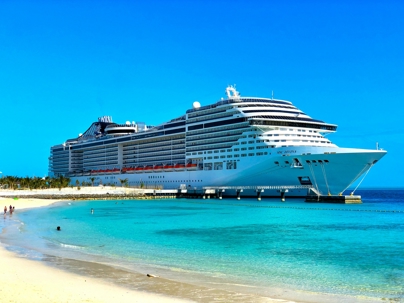
A cruise vacation is supposed to be an opportunity to relax, explore new destinations, and enjoy time with family and friends. Unfortunately, accidents aboard cruise ships can turn a vacation into a medical and legal emergency within seconds.
Passengers can suffer serious injuries from wet decks, defective stairs, poorly maintained equipment, falling objects, swimming pool accidents, unsafe shore excursions, inadequate security, food-related illnesses, and many other hazards. In the most serious cases, a cruise ship accident can result in catastrophic injury or wrongful death.
What many injured passengers do not realize is that a cruise ship accident claim can be very different from a typical personal injury case. Depending on where the accident occurred, where the ship departed, the terms of the passenger ticket contract, and the parties involved, federal maritime law may apply. Cruise contracts may also contain important notice requirements, filing deadlines, and provisions specifying where a lawsuit must be brought.
Understanding these rules can be critical after a cruise ship injury.
What Is Considered a Cruise Ship Accident?
A cruise ship accident does not necessarily mean that the ship itself crashed or experienced a major maritime disaster. Many cruise ship personal injury claims involve incidents that occur during ordinary activities aboard the vessel.
Common cruise ship accidents may include:
- Slip-and-fall accidents on wet or slippery decks
- Trip-and-fall accidents involving stairs, thresholds, or uneven surfaces
- Swimming pool and hot tub accidents
- Falls from balconies or staircases
- Elevator and escalator accidents
- Falling objects
- Defective furniture or equipment
- Burns from hot surfaces, food, beverages, or steam
- Food poisoning and gastrointestinal illness
- Injuries during onboard recreational activities
- Accidents involving tenders or smaller boats
- Shore excursion accidents
- Assaults or inadequate security incidents
- Crew member negligence
- Medical negligence involving onboard medical personnel
- Fires or mechanical failures
- Collisions and other navigation-related incidents
The legal issues surrounding each accident can be substantially different.
Who Can Be Responsible for a Cruise Ship Accident?
A cruise line is not automatically responsible simply because an accident occurred onboard. Under federal maritime principles commonly applied to passenger injury claims, cruise operators generally owe passengers a duty of reasonable care under the circumstances.
Courts have explained that cruise operators may be liable when they knew or reasonably should have known about certain dangerous conditions and failed to adequately correct the danger or warn passengers. Evidence showing how long a dangerous condition existed, previous similar incidents, inspections, maintenance practices, complaints, or warnings may therefore become important in establishing notice.
Depending on the circumstances, potentially responsible parties could include the cruise line, vessel operator, maintenance contractors, equipment manufacturers, excursion companies, concession operators, security contractors, or other businesses operating aboard or in connection with the cruise.
Identifying the correct defendant is particularly important because not every business operating on a cruise ship is necessarily owned or controlled by the cruise line.
Slip-and-Fall Accidents on Cruise Ships
Slip-and-fall accidents are among the most recognizable examples of cruise ship injuries.
Cruise ships naturally contain areas exposed to water, including swimming pools, outdoor decks, restaurants, bars, spas, and entrances from exterior areas. However, the presence of water does not automatically establish negligence.
Imagine a passenger walking from a restaurant toward an elevator. A drink was spilled in the hallway and remained there long enough for crew members to discover and clean it, but no one did. There were no cones or warning signs. The passenger slips, fractures a hip, and requires surgery.
A cruise ship injury investigation could examine questions such as:
How long was the liquid on the floor? Did employees know about it? Should routine inspections have discovered it? Were there previous accidents in that location? Was surveillance footage available? Did employees regularly clean or inspect the area?
These details can make the difference between simply proving that an accident happened and proving that negligence contributed to it.
In Keefe v. Bahama Cruise Line, a significant maritime passenger case involving a slippery dance floor, the Eleventh Circuit explained that reasonable care can require evidence that the carrier had actual or constructive notice of the dangerous condition.
Stairway and Trip-and-Fall Accidents
Cruise ships contain countless stairways, raised thresholds, ramps, narrow passages, and transitions between indoor and outdoor areas.
A passenger may be injured because of inadequate lighting, damaged flooring, loose carpeting, defective handrails, improperly marked steps, or another dangerous condition.
For example, suppose a passenger is descending a staircase to attend an evening show. A section of the stairway is poorly illuminated, making a change in elevation difficult to see. The passenger misses the step, falls forward, and suffers a serious knee and shoulder injury.
A resulting cruise ship negligence claim could require examination of the lighting system, maintenance records, design of the staircase, warning signs, previous passenger complaints, prior similar accidents, and whether the cruise operator had notice of the alleged hazard.
Swimming Pool and Recreational Accidents
Modern cruise ships can resemble floating resorts. They may contain swimming pools, water slides, climbing walls, surf simulators, sports courts, children's play areas, and other attractions.
Those activities can also produce serious injuries.
Consider a passenger using an onboard water attraction. If equipment is defective, safety procedures are inadequate, employees provide incorrect instructions, or the attraction is negligently maintained, questions of liability may arise.
Evidence could include inspection records, maintenance logs, manufacturer instructions, employee training procedures, video surveillance, witness statements, and prior incidents.
Shore Excursion Accidents
Some of the most complicated cruise injury cases happen away from the vessel.
Cruise passengers frequently purchase excursions involving buses, boats, snorkeling, scuba diving, hiking, horseback riding, ziplining, sightseeing, or other activities.
Suppose a passenger purchases an excursion marketed during a cruise. During transportation to the attraction, the excursion vehicle crashes and the passenger suffers serious injuries.
Determining liability may require answering several questions: Who owned the vehicle? Who employed the driver? Who operated the excursion? What relationship existed between the excursion operator and cruise line? What representations were made to passengers? What contractual provisions apply?
The fact that an excursion was promoted or sold in connection with a cruise does not necessarily mean the cruise company will automatically be legally responsible for everything the independent excursion operator does. These cases require careful analysis of the facts and contractual relationships.
Cruise Ship Medical Emergencies
Cruise ships may have medical facilities and medical personnel onboard, but they do not provide the same resources as a major hospital.
When a passenger becomes seriously ill or injured, questions may arise regarding diagnosis, treatment, emergency response, evacuation, and whether the passenger should have been transferred to an onshore medical facility.
Cruise-related medical negligence claims can involve additional legal complexities. Federal law now expressly addresses certain issues involving a vessel owner's vicarious liability for medical malpractice by onboard medical personnel, making it especially important to evaluate the particular facts and applicable law rather than assuming ordinary land-based malpractice rules control.
Case Study Example: A Wet Deck and Serious Back Injury
Consider this hypothetical situation.
A 58-year-old passenger leaves a cruise ship restaurant after dinner. Several passengers have tracked water into a corridor from an outdoor deck. The area has allegedly remained wet for an extended period, but no warning signs have been placed nearby.
The passenger slips violently and lands on her lower back.
Initially, she believes she is simply bruised. The ship's medical center evaluates her, and she continues the trip. After returning home, worsening pain leads to additional imaging, which reveals a significant spinal injury.
A cruise ship accident attorney investigating the claim may seek evidence such as surveillance footage, incident reports, maintenance schedules, inspection logs, witness information, photographs, medical records, and records of previous accidents.
This example also demonstrates why passengers should not assume that an injury is minor simply because the full symptoms do not appear immediately.
What Should You Do After a Cruise Ship Accident?
The actions taken immediately after an accident can significantly affect the evidence available later.
If physically possible, photograph or record the accident location before conditions change. Photograph the substance, broken equipment, staircase, flooring, lighting, warning signs—or absence of warnings—and surrounding area.
Report the accident to cruise personnel and request documentation.
Obtain the names and contact information of witnesses. Fellow passengers may later provide important independent testimony about the condition that caused the accident.
Seek appropriate medical attention. Medical documentation can help establish when symptoms began, what injuries were reported, and what treatment was provided.
Passengers should also preserve their cruise ticket, booking confirmation, emails, excursion receipts, photographs, medical paperwork, incident documentation, and communications with the cruise company.
Cruise Ship Accident Deadlines Can Be Much Shorter Than Expected
One of the biggest mistakes an injured cruise passenger can make is assuming that the normal personal injury statute of limitations automatically applies.
Federal maritime law generally provides a three-year limitations period for personal injury or death arising from a maritime tort unless another rule applies. However, passenger contracts can lawfully shorten certain deadlines.
Under 46 U.S.C. § 30526, for covered seagoing vessels transporting passengers between U.S. ports or between a U.S. and foreign port, a carrier cannot contractually reduce the period for providing notice of a personal injury or death claim to less than six months or the period for bringing a civil action to less than one year.
That means a passenger's cruise ticket contract can be extremely important.
Waiting two years because you assume you have a typical state personal injury deadline could potentially create serious problems if your cruise contract contains a valid one-year filing requirement.
Where Do You File a Cruise Ship Injury Lawsuit?
Another surprise may be the location where the passenger is required to pursue the case.
Cruise passenger contracts can contain forum-selection clauses specifying where certain lawsuits must be filed. Depending on the cruise line and ticket terms, that location may be far from where the passenger lives or where the cruise departed.
The U.S. Supreme Court has recognized the enforceability of cruise-ticket forum-selection provisions under appropriate circumstances, which is one reason the passenger contract should be reviewed promptly after an accident.
Never assume that because you live in California or boarded a cruise in California, a lawsuit can automatically be filed in a California court.
What Compensation May Be Available After a Cruise Ship Injury?
When negligence is established, recoverable damages depend on the facts, applicable maritime law, and nature of the injuries.
Potential damages in a cruise ship personal injury claim may include medical expenses, future medical treatment, lost income, loss of earning capacity, pain and suffering, physical limitations, rehabilitation expenses, and other legally recoverable losses.
Catastrophic accidents may involve traumatic brain injuries, spinal cord injuries, fractures, permanent nerve damage, severe orthopedic injuries, disfigurement, or long-term disability.
Wrongful death cases can involve additional federal maritime laws and different rules depending on where the death occurred.
Case Study Example: Dangerous Staircase
Consider another hypothetical case.
A passenger is walking toward the ship's theater when she encounters a poorly illuminated step. She does not see the elevation change, falls, and fractures her wrist.
Simply proving that she fell would not necessarily establish cruise line negligence.
An investigation might instead focus on whether the lighting was defective, whether employees had previously reported the problem, whether other passengers had fallen in the same area, how long the condition existed, whether warning signs should have been installed, and whether the cruise operator's own inspection procedures identified the problem.
Evidence of prior substantially similar incidents can sometimes help establish constructive notice of a dangerous condition. Federal appellate decisions have recognized both the duration of a defective condition and substantially similar prior incidents as potential methods of establishing constructive notice.
Why Cruise Ship Accident Claims Require Immediate Investigation
Evidence aboard a cruise ship can disappear quickly.
The vessel continues operating. Passengers disembark. Employees may rotate to different assignments. A wet floor is cleaned. Broken equipment may be repaired. Surveillance footage may eventually be overwritten or deleted according to retention policies.
That makes early preservation of evidence especially important.
An investigation may include requesting surveillance footage, identifying witnesses, examining incident reports, reviewing inspection and maintenance records, obtaining medical documentation, analyzing passenger contracts, researching prior similar incidents, and identifying every potentially responsible company.
Injured on a Cruise Ship? Arshakyan Law Firm Can Help You Understand Your Options
A serious cruise ship accident can leave a passenger dealing with medical treatment, lost income, physical pain, and uncertainty about what to do next. Maritime injury claims may also involve unfamiliar laws, contractual deadlines, and jurisdictional requirements that make them significantly different from ordinary personal injury cases.
If you or a loved one suffered an injury aboard a cruise ship, during embarkation or disembarkation, or in connection with a cruise excursion, it is important to have the circumstances reviewed promptly.
Arshakyan Law Firm can evaluate the facts surrounding your accident, review the applicable passenger contract and potential deadlines, investigate available evidence, and help determine what legal options may be available.
Do not assume that you have several years to decide what to do. Cruise ship injury claims can have much shorter contractual deadlines than other personal injury cases.
Contact Arshakyan Law Firm today to schedule a consultation. Call 818-650-9985. We are in your corner!