
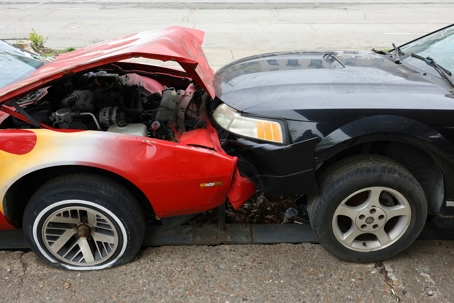
After a car accident, determining who was at fault is not always straightforward. One driver may insist that the other ran a red light, changed lanes without warning, was speeding, or failed to yield. Meanwhile, the other driver may tell a completely different story.
So, what happens when both drivers blame each other for a car accident?
In California, conflicting stories do not automatically prevent an injured person from recovering compensation. Fault can be investigated using physical evidence, photographs, videos, witness statements, police reports, vehicle damage, electronic data, medical records, and other evidence. In some accidents, investigators may ultimately determine that both drivers share responsibility.
Understanding how fault is determined can be especially important when dealing with insurance companies. An insurer may attempt to place as much responsibility as possible on the other driver, including an injured claimant, to reduce the amount it has to pay.
When Both Drivers Say the Other Person Caused the Accident
Imagine two vehicles collide in an intersection.
Driver A says:
“I had the green light. Driver B entered the intersection and hit me.” Driver B says:
“No. I had the green light. Driver A is the one who entered the intersection illegally.”
Without additional evidence, the accident initially appears to be one person's word against another's.
But determining liability for a California car accident does not necessarily end there.
A thorough car accident investigation may examine:
- Traffic-camera footage
- Surveillance video from nearby businesses or homes
- Dashcam recordings
- Photographs and videos from the accident scene
- Vehicle damage
- Skid marks
- Debris patterns
- Road conditions
- Traffic signals and signs
- Eyewitness statements
- Police reports
- Cellphone records when relevant
- Vehicle event data
- Medical documentation
- Statements made immediately after the collision
- Accident reconstruction evidence
These pieces of evidence can sometimes establish what happened even when the drivers give completely conflicting accounts.
Who Determines Fault in a California Car Accident?
There is not necessarily one person who makes the final decision about fault immediately after an accident.
Insurance companies conduct their own investigations when evaluating claims. Police officers may document observations and statements in a traffic collision report. Attorneys may conduct additional investigations and obtain evidence that was not available at the scene.
If the parties cannot resolve the dispute and a lawsuit is filed, fault may ultimately become an issue for a judge or jury.
This distinction is important because an insurance company's initial determination of fault is not necessarily the final word.
An insurer might initially claim that you caused an accident. Additional evidence could later demonstrate that the other driver was primarily, or entirely, responsible.
California Uses a Pure Comparative Negligence System
One of the most important concepts in a California car accident case is comparative negligence, sometimes called comparative fault.
California follows a pure comparative negligence approach. This generally means that an injured person's compensation can be reduced according to that person's percentage of responsibility for the accident.
For example, suppose a driver's damages total $100,000.
If that driver is found 20% responsible for causing the accident, the driver's potential recovery could generally be reduced by 20%, resulting in $80,000.
This becomes particularly important when both drivers blame each other. The legal question does not always have to be:
“Which driver was 100% responsible?”
Instead, the evidence may lead to an allocation of responsibility between the parties.
Example: Both Drivers May Have Contributed to the Crash
Consider this scenario.
Driver A is traveling through an intersection at 50 mph where the posted speed limit is 35 mph.
Driver B attempts a left turn across Driver A's path without sufficient time to complete the turn safely.
The vehicles collide.
Driver A argues:
“Driver B caused the accident by turning directly in front of me.”
Driver B responds:
“Driver A was speeding. If Driver A had been traveling at the speed limit, the collision might have been avoided or less severe.”
Both allegations could matter.
An investigation might conclude that Driver B bears most of the responsibility for failing to yield but that Driver A also contributed to the accident by speeding.
For illustration, responsibility might ultimately be allocated:
Driver B: 75%
Driver A: 25%
If Driver A suffered $200,000 in recoverable damages, Driver A's recovery could potentially be reduced by the 25% share of responsibility.
The exact percentages depend on the evidence and circumstances of the individual case.
Case Study Scenario: Conflicting Stories After a Lane-Change Accident
Consider another hypothetical case.
Maria is driving north on a Los Angeles freeway. Daniel is traveling in the lane next to her. Their vehicles collide while traveling side by side.
Maria says Daniel suddenly moved into her lane without signaling. Daniel says Maria drifted into his lane.
There are no independent witnesses who stopped at the scene.
At first, the case appears difficult because both drivers blame each other. However, additional investigation reveals several important details.
Photographs show that the damage begins near the front driver's side of Daniel's vehicle and extends backward. Maria's vehicle has damage concentrated along the passenger side.
A nearby vehicle's dashcam also captured several seconds before the impact.
The video shows Daniel beginning to cross the lane divider shortly before the collision. That evidence could significantly change the liability analysis.
This example illustrates why drivers should not assume that a disputed accident is impossible to prove simply because the other driver refuses to accept responsibility.
What Evidence Can Prove Who Caused a Car Accident?
When both drivers blame each other, car accident evidence becomes extremely important.
Photos and Videos
Photographs should capture more than vehicle damage. When it is safe to do so, useful photographs may include:
- The positions of the vehicles
- Damage to every involved vehicle
- Traffic signals
- Stop signs
- Lane markings
- Intersections
- Skid marks
- Debris
- Road hazards
- Weather conditions
- Nearby businesses or buildings that may have cameras
Video evidence can be especially valuable when drivers provide conflicting versions of an accident.
Witness Statements
An independent witness may provide important evidence regarding which vehicle had the right of way, whether someone was speeding, whether a driver changed lanes improperly, or which traffic signal was displayed.
Whenever possible, obtain the witness's name and contact information.
Police Reports
A police report can contain important information, including statements from drivers and witnesses, descriptions of the accident scene, diagrams, and observations made by the investigating officer.
However, the existence of a police report does not necessarily end a dispute about liability. Additional investigation may still be necessary.
Vehicle Damage
The location and severity of vehicle damage can sometimes help investigators understand how a collision occurred.
For example, damage patterns may help determine whether a crash involved:
- A rear-end impact
- A sideswipe
- A head-on collision
- An angled intersection impact
- A turning vehicle
- Multiple impacts
In complicated cases, an accident reconstruction professional may analyze vehicle damage along with other physical evidence.
What If There Are No Witnesses?
A lack of eyewitnesses does not necessarily mean there is no case. Many accidents occur without independent witnesses.
Attorneys may look for other forms of evidence, including surveillance cameras, dashcams, vehicle data, photographs, road evidence, electronic records, and inconsistencies in the other driver's statements.
Timing can be critical.
For example, a nearby business may have surveillance footage of an accident but automatically erase or overwrite recordings after a certain period.
Waiting too long to investigate may result in valuable evidence disappearing.
What If the Other Driver Lies About the Accident?
Unfortunately, drivers do not always agree about what happened.
Sometimes people remember events differently because accidents happen extremely quickly. In other situations, a driver may change their story after realizing that admitting certain facts could expose them to liability.
That is why objective evidence can be so important. Suppose a driver tells police:
“I was traveling about 30 mph.”
Later, evidence indicates that the vehicle was traveling substantially faster immediately before the impact.
Or perhaps a driver claims:
“I never changed lanes.”
But surveillance footage shows that driver's vehicle crossing the lane divider seconds before impact.
Contradictions can affect the credibility of a driver's version of events.
Should You Admit Fault After an Accident?
Drivers should provide truthful information about what happened, but they should be cautious about making unnecessary statements about legal responsibility before all the facts are known.
Immediately after an accident, a person may not know everything that contributed to the collision.
For example, someone might initially say:
“I'm sorry. I didn't see you.”
That does not necessarily explain whether the other driver was speeding, distracted, violating a traffic signal, or committing another traffic violation.
Stick to the facts.
Avoid guessing about things you did not see or do not know.
Be Careful When Speaking With the Other Driver's Insurance Company
Insurance companies investigate accidents partly to determine how much they may be required to pay.
When liability is disputed, an insurer may ask detailed questions about:
- Your speed
- Where you were looking
- When you first saw the other vehicle
- Whether you were using your phone
- Whether you were distracted
- Whether you were tired
- Your actions immediately before impact
- Your injuries
- Your previous medical history
Statements made during these conversations may later become part of the claim.
When serious injuries or disputed liability are involved, speaking with a California car accident attorney before providing extensive statements to the opposing insurance company may help protect your interests.
What If the Insurance Company Says You Are 50% at Fault?
An insurance company's decision is not necessarily the final determination of liability.
If an insurer claims that you are partially responsible for an accident, the evidence supporting that conclusion should be examined.
Important questions may include:
- Why does the insurer believe you were negligent? What evidence supports its percentage of fault?
- Were all witnesses interviewed?
- Was available video footage obtained? Were photographs properly evaluated? Was vehicle damage analyzed?
- Did the insurer rely primarily on the other driver's statement? Is additional evidence available?
A disputed liability determination may sometimes be challenged through further investigation and evidence.
Case Study Scenario: The Red-Light Dispute
Imagine Jennifer and Robert collide in a Los Angeles intersection. Jennifer says she entered on a green light.
Robert says exactly the same thing. Both drivers suffer injuries.
There are no obvious witnesses listed on the police report. Jennifer believes she cannot prove her case.
Her attorney investigates nearby properties and discovers that a gas station has an exterior security camera facing part of the intersection.
The footage does not clearly show the traffic signal itself, but it shows vehicles traveling through the perpendicular roadway immediately before Jennifer enters the intersection.
Combined with traffic-signal timing information and other evidence, the footage may help reconstruct which direction likely had the right of way.
The lesson is simple: the most important evidence is not always contained in the police report.
Rear-End Accidents Can Also Involve Disputed Fault
People often assume the rear driver is automatically responsible for every rear-end collision.
Many rear-end crashes are caused by drivers who follow too closely, speed, or fail to stop in time. However, unusual circumstances can create additional liability questions.
For example, suppose one vehicle suddenly changes lanes directly in front of another vehicle and immediately brakes.
The rear driver may argue that there was not enough time or distance to avoid the collision.
Determining liability may require examining:
- Following distance
- Vehicle speeds
- Lane-change movements
- Brake lights
- Traffic conditions
- Dashcam footage
- Witness statements
Again, the facts matter.
What Damages Can Be Recovered After a California Car Accident?
When another driver's negligence causes injuries, recoverable damages may depend on the circumstances of the case.
Potential damages in a California personal injury claim can include compensation for:
- Emergency medical treatment
- Hospitalization
- Surgery
- Doctor visits
- Physical therapy
- Prescription medications
- Future medical treatment
- Lost wages
- Reduced earning capacity
- Pain and suffering
- Emotional distress
- Property damage
- Other accident-related losses
Serious injuries may create substantial future costs, making it particularly important to understand the full extent of damages before resolving a claim.
What Should You Do When Both Drivers Blame Each Other?
If fault is disputed after an accident, the steps taken immediately afterward can affect the evidence available later.
When possible:
- Call law enforcement and report the accident.
- Seek medical attention for injuries.
- Photograph the accident scene and vehicles.
- Record video of the surrounding area.
- Obtain witness contact information.
- Exchange insurance and identification information.
- Avoid arguments about fault at the scene.
- Preserve dashcam recordings.
- Identify nearby surveillance cameras.
- Keep medical records, receipts, and accident-related documents.
- Report the accident to your insurer as required.
- Consider speaking with a personal injury attorney before giving extensive statements to another driver's insurance company.
Most importantly, do not assume that the other driver's denial means you cannot pursue a claim.
Frequently Asked Questions About Disputed-Fault Car Accidents
Can both drivers be at fault for a car accident in California?
Yes. California's comparative negligence rules allow responsibility to be divided between parties when more than one person contributed to an accident.
Can I recover compensation if I was partially at fault?
Potentially, yes. Under California's pure comparative negligence system, an injured person's compensation may generally be reduced according to that person's percentage of fault.
What happens if neither driver admits fault?
The claim can be investigated using available evidence. Insurance companies may make liability determinations, and if the dispute cannot be resolved, liability may ultimately be addressed through litigation.
What if the other driver's insurance company denies my claim?
A denial does not necessarily mean the matter is over. The basis for the denial and available evidence should be reviewed to determine what options may remain.
Can video footage prove who caused an accident?
Video can be powerful evidence. Dashcams, traffic cameras, security systems, doorbell cameras, and nearby businesses may capture useful information about an accident.
Should I hire an attorney if fault is disputed?
Disputed liability can make a personal injury claim significantly more complicated. A California car accident lawyer can investigate the collision, preserve evidence, communicate with insurers, evaluate comparative-fault allegations, and pursue compensation when appropriate.
Why Disputed-Fault Accident Claims Require Careful Investigation
When both drivers blame each other, the case often comes down to evidence.
A driver should not lose an otherwise valid personal injury claim simply because the other person tells a different version of what happened.
A thorough investigation may uncover evidence that was not obvious at the accident scene.
At Arshakyan Law Firm, we understand that car accident cases can become complicated when drivers and insurance companies disagree about responsibility. Our legal team can examine the facts, investigate available evidence, evaluate liability, and help injured individuals understand their legal options.
If you were injured in a California car accident and the other driver is blaming you, do not assume that you have no case. Contact Arshakyan Law Firm to discuss your accident and learn more about your rights and options.
Call 818-650-9985 to schedule a free and confidential consultation. We are in your corner!